Herdscripting 101: The Hidden Infrastructure Behind Every Dairy Treatment
How treatment protocols really work on U.S. dairy farms, and why the gap between what the vet prescribes and what happens at the chute is the most expensive problem in dairy animal health.
*How treatment protocols really work on U.S. dairy farms, and why the gap between what the vet prescribes and what happens at the chute is the most expensive problem in dairy animal health.*
---
Every morning on every dairy farm in America, someone treats a cow. Maybe she freshened yesterday and spiked a fever. Maybe she's been lame for three days and isn't improving. Maybe she's one of forty dry cows getting her final intramammary infusion before the dry period begins.
In each case, the person administering the treatment is almost certainly not a veterinarian. It's the herdsman, the milker, the farm owner's son-in-law, or the night shift employee who was given a twenty-minute orientation three weeks ago. The veterinarian who authorized that treatment might be thirty miles away, seeing patients at another farm. But the legal authority to treat that cow, the regulatory scaffolding that makes it lawful for a non-veterinarian to administer a prescription drug to a food-producing animal, rests on a document that most people in the dairy industry have never actually read.
That document is the herdscript.
This article is a deep dive into how treatment protocols work on dairy farms today: the legal framework, the clinical reality, the regulatory obligations, and the five ways the system routinely fails. Whether you're a veterinarian writing protocols, a farmer executing them, a technology vendor building tools for dairy, or an investor trying to understand the domain, this is the infrastructure you need to know.
---
## What Is a Herdscript?
The term "herdscript" is dairy shorthand for a standing treatment protocol, a written set of instructions from a licensed veterinarian authorizing specific treatments for specific conditions in a herd. Think of it as a prescription written not for one animal, but for a population, effective not for one episode, but for a defined period.
The concept emerged from practical necessity. A dairy veterinarian cannot be physically present every time a cow needs treatment. A 1,200-head dairy might have fifteen to twenty animals requiring some form of treatment on any given day, fresh cow checks, mastitis cases, respiratory events, lameness, metabolic disorders. If every treatment required a same-day veterinary visit, the economics of dairy medicine would collapse. The vet would need to live on the farm, and the farm couldn't afford that.
So instead, the veterinarian establishes a relationship with the farm, examines the herd, understands the facilities and the capabilities of the people who work there, and then writes treatment protocols that the farm's employees can execute in the vet's absence. The vet says, in effect: "When you see this condition, do this."
That authorization isn't informal. It rests on one of the most important legal constructs in veterinary medicine: the VCPR.
### The VCPR: The Legal Foundation
The Veterinary-Client-Patient Relationship (VCPR) is the regulatory prerequisite for everything that follows. Without it, a farmer has no legal authority to administer prescription drugs to livestock. Without it, a veterinarian cannot prescribe drugs for animals they haven't examined. Without it, treatment protocols are legally meaningless.
The VCPR requirements vary slightly by state, but the core elements defined by the American Veterinary Medical Association are consistent:
1. **The veterinarian has assumed responsibility** for making clinical judgments about the health of the animals.
2. **The veterinarian has sufficient knowledge** of the animals to initiate at least a general or preliminary diagnosis. This means the vet has recently seen and is personally acquainted with the keeping and care of the animals, typically through farm visits.
3. **The veterinarian is readily available** for follow-up evaluation, or has arranged for emergency coverage.
4. **The client has agreed** to follow the veterinarian's instructions.
In practice, "recently seen" usually means at least one farm visit within the past twelve months, though many states and many veterinary practice acts require more frequent contact. Some processors and quality assurance programs impose stricter requirements, the FARM Program, for instance, requires an annual VCPR review as part of its Tier I evaluation.
The VCPR is not a piece of paper. It's a relationship, and it must be renewed. When it lapses, because the vet hasn't visited the farm, because the vet's license has expired, because the farm changed veterinarians without establishing a new VCPR, every treatment administered under that expired authority is, technically, unauthorized.
### How a Herdscript Differs from an Individual Prescription
When a physician writes a prescription for a human patient, the prescription identifies a specific patient, a specific drug, a specific dose, and a specific duration. A herdscript is fundamentally different in three ways:
**Population-level scope.** The herdscript doesn't name individual animals. It defines criteria: "Fresh cows, 0-14 days in milk." "Calves with respiratory symptoms and rectal temperature above 103.5 degrees Fahrenheit." Any animal meeting those criteria is eligible for treatment under the protocol.
**Conditional logic.** A herdscript is a decision tree, not a simple "give Drug X." If temperature is above threshold, add an NSAID. If the cow doesn't respond in 48 hours, escalate. If discharge score is 3, call the vet. The protocol must account for the fact that the person executing it is not trained in differential diagnosis.
**Standing authority.** An individual prescription is consumed when filled. A herdscript remains in effect until the vet revokes or modifies it, creating a version control problem we'll return to later.
---
## The Anatomy of a Treatment Protocol
A well-written herdscript is a clinical document with engineering precision. Each element matters, and each missing element is a potential compliance failure. Here's what goes into one.
### Drug Selection
The veterinarian selects drugs based on the condition being treated, the pathogen suspected, the drug's spectrum of activity, and the withdrawal profile. For a fresh cow with metritis, the go-to in many herds is ceftiofur, sold as Excenel RTU (ready-to-use, subcutaneous) or Excede (a sustained-release formulation). For clinical mastitis, Spectramast LC (intramammary ceftiofur) or Spectramast DC (dry cow formulation) are common choices. For fever and inflammation, flunixin meglumine, Banamine, is the standard NSAID.
Drug selection is not arbitrary. The vet is choosing within the constraints of FDA-approved label indications, withdrawal profiles, cost, and the antimicrobial stewardship obligations increasingly imposed by processors and quality programs.
### Route of Administration
Every drug has an FDA-approved route of administration printed on its label. Excenel RTU is labeled for subcutaneous (SQ) injection in the neck. Banamine is labeled for intravenous (IV) administration in cattle. Spectramast LC is an intramammary infusion. ToMORROW is an intramammary dry cow treatment. Bovikalc is an oral bolus.
The route matters enormously, not just for efficacy, but for residue avoidance. Banamine administered intramuscularly (IM) in cattle, while occasionally still seen in the field, creates injection site lesions and unpredictable tissue residues. The FDA has been explicit: flunixin meglumine should be given IV in cattle. Administering it IM is extra-label use, and it's one of the most common ELDU violations in the dairy industry.
### Weight-Based Dosing
Most injectable drugs in dairy are dosed by body weight, typically expressed as milliliters per hundredweight (mL per cwt). Excenel RTU is labeled at 1.0 to 2.0 mL per 100 pounds body weight (the higher end is more common in dairy practice). Banamine is labeled at 1.0 mL per 100 pounds IV.
This means the person at the chute needs to know two things: the drug's dose rate and the cow's weight. On farms with walk-over scales, this is straightforward. On farms without scales, which is most of them, the weight is an estimate. An experienced herdsman can estimate a Holstein's weight to within 50 to 100 pounds by eye. An inexperienced one might be off by 200 pounds or more, which translates directly to a 15 to 20 percent dosing error.
For a 1,400-pound cow getting Excenel RTU at 2.0 mL/cwt, the correct dose is 28 mL. If the person at the chute thinks she weighs 1,200 pounds, they'll draw 24 mL, an underdose that may result in subtherapeutic drug concentrations, treatment failure, and a contribution to antimicrobial resistance. If they guess 1,600 pounds, they'll draw 32 mL, an overdose that wastes drug and may extend the withdrawal period.
### Withdrawal Periods
Every FDA-approved drug carries two withdrawal periods: one for meat and one for milk. These are the minimum times that must elapse after the last dose before the animal's meat or milk can enter the food supply.
Excenel RTU has a 4-day meat withdrawal and a zero-day milk withdrawal (no milk discard required). Spectramast LC has a zero-day meat withdrawal and a 72-hour milk withdrawal. Banamine has a 4-day meat withdrawal and a 36-hour milk withdrawal.
These numbers seem simple, but the complexity is in the "last dose" language. For a multi-day treatment course, Excenel RTU for five consecutive days for metritis, the withdrawal period doesn't start on Day 1 of treatment. It starts on Day 5, the last day of treatment. A cow treated with Excenel RTU starting on Monday and finishing on Friday has a meat withdrawal that clears on the following Tuesday (4 days after the last dose), not on Friday (4 days after the first dose).
This distinction catches farms. A lot.
### Multi-Day Treatment Courses
Many dairy treatment protocols involve multi-day courses. Metritis protocols commonly call for 3 to 5 consecutive days of ceftiofur. Respiratory protocols might call for 3 days of Draxxin or Zuprevo, though these long-acting formulations are often single-dose. Mastitis protocols might call for 3 intramammary infusions over consecutive milkings (which, in a 3x milking herd, means treatments 8 hours apart).
Multi-day courses create a tracking problem. The person treating on Day 1 might not be the same person treating on Day 2. The cow needs to be identified, her treatment history needs to be accessible, and the protocol needs to specify what happens if a dose is missed. If Cow 3100 was supposed to get her third Excenel RTU injection on Wednesday morning and nobody treated her until Thursday morning, 36 hours late instead of 24, is that a missed dose? Does the course restart? Does the withdrawal period change? The protocol should address this. Most don't.
### Conditional Branching
The most sophisticated herdscripts include decision logic. A fresh cow protocol might read:
1. Take rectal temperature.
2. Score vaginal discharge (0 to 3 scale, with 0 being clear mucus and 3 being fetid, watery, or brown).
3. If temperature is above 103.5 degrees Fahrenheit, administer Excenel RTU at 2.0 mL/cwt SQ.
4. If temperature is above 104.5 degrees Fahrenheit, also administer Banamine at 1.0 mL/cwt IV.
5. If discharge score is 2 or higher, administer Excenel RTU for 5 consecutive days. If no improvement by Day 3, call the veterinarian.
6. If discharge score is 3 with fetid odor, call the veterinarian immediately. Do not treat without consultation.
This branching logic transforms the protocol from a simple list of instructions into a clinical algorithm. It's the vet's expertise, encoded in a decision tree, designed to be executed by someone who isn't a vet. The quality of the branching logic, and the clarity with which it's written, directly determines whether the protocol is followed correctly.
---
## The Chute-Side Reality
Now forget everything you just read about well-structured protocols with conditional logic and precise dosing. Here's what actually happens at 5:00 AM.
Tom, the herdsman, has been up since 4:00. He's already run the milking parlor through first milking, scraped the alleys, and fed the fresh pen. Now he's got fifteen fresh cows to check. He walks to the treatment area, a headlock section of the freestall barn, maybe a dedicated treatment chute on better farms, with a bucket of supplies: bottles of Excenel, Banamine, Bovikalc, syringes, needles, a digital thermometer, and a rectal sleeve.
He doesn't have the protocol memorized, exactly, but he's been doing this for six years. He knows the drill. If she's hot, she gets Excenel. If she's really hot, she gets Banamine too. The protocol is taped to the wall on a laminated card that the vet printed two years ago. The vet updated the Excenel dose from 1.5 to 2.0 mL/cwt last spring, but the laminated card still shows 1.5. Nobody reprinted it.
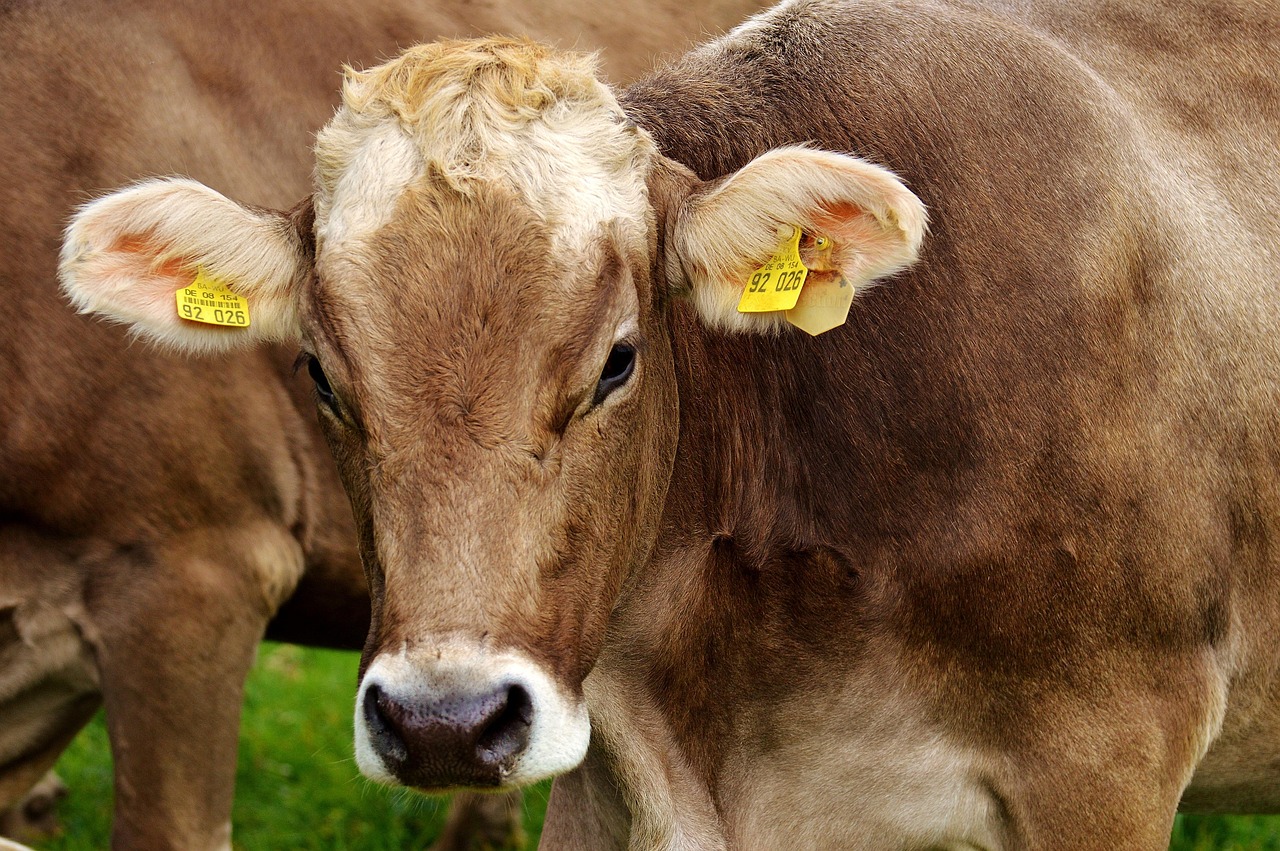
Tom grabs the first cow. He reads her ear tag, it's 3100, one of his better cows, a second-lactation Holstein that freshened four days ago. He takes her temperature: 104.1. Hot. He reaches for the Excenel, does the math in his head. She's a big cow, probably fourteen hundred. Fourteen times 1.5, no wait, Dr. Jones said 2.0 now, so fourteen times 2, that's 28 mL. He draws 28 mL from the 100-mL bottle, injects SQ in the neck.
The lot number on the Excenel bottle? He doesn't write it down. He'll remember the bottle, it's the one that's been in the fridge since last week. But "remember" doesn't satisfy an FDA investigator during a tissue residue investigation.
He moves through the rest of the fresh cows. Three more get Excenel. One gets Banamine too, her temperature was 105.2 and she was barely standing. He writes the treatments in a spiral notebook: "3100 - Exc. 3247 - Exc. 3089 - Exc + Ban. 2891 - Exc." The doses aren't recorded. The lot numbers aren't recorded. The route of administration isn't recorded. The time of treatment isn't recorded.
Back at the office, Sarah, the farm's bookkeeper and office manager, is supposed to enter these treatments into DairyComp. But she doesn't come in until 8:00 AM, and by then the spiral notebook is on the dashboard of Tom's truck, and he's out moving heifers. She'll enter them tomorrow. Or Thursday. The withholding whiteboard in the parlor hasn't been updated since Tuesday. Cow 3089, who got Banamine this morning and has a 36-hour milk withdrawal, is not marked on the board. If nobody catches it before tonight's milking, her milk goes into the bulk tank.
This is not a bad farm. This is a normal farm.
---
## The Regulatory Framework
The gap between what the vet prescribes and what happens at the chute exists within a regulatory framework that, on paper, is comprehensive. In practice, compliance is more aspiration than reality on many operations.
### AMDUCA and Extra-Label Drug Use
The Animal Medicinal Drug Use Clarification Act of 1994 (AMDUCA, codified at 21 U.S.C. Section 360b and implemented through 21 CFR Part 530) is the federal law that governs how drugs are used in food-producing animals. Its central principle is straightforward: drugs should be used according to their FDA-approved labeling. When they're not, when the dose is changed, the route is changed, the species is different from what's on the label, or the drug is used for a condition it wasn't approved for, that's Extra-Label Drug Use (ELDU).
ELDU is legal, but only under strict conditions:
1. **A valid VCPR must exist.** This is non-negotiable. No VCPR, no ELDU.
2. **A licensed veterinarian must authorize the extra-label use.** The farmer cannot decide on their own to double the dose or change the route.
3. **The veterinarian must determine there is no approved drug** that, used as labeled, would adequately treat the condition. ELDU is not a first resort.
4. **The veterinarian must ensure an extended withdrawal period** is established to protect food safety. This is where it gets complicated.
5. **Appropriate records must be maintained.** Records must identify the animals, the drug, the dose, the route, the duration, the withdrawal period, and the prescribing veterinarian.
Some ELDU is categorically prohibited. Fluoroquinolones (enrofloxacin, sold as Baytril) are banned for extra-label use in food-producing animals. Chloramphenicol is prohibited in food-producing animals entirely. Clenbuterol, diethylstilbestrol, sulfonamides in lactating cattle over twenty months of age, all prohibited.
In practice, ELDU happens constantly on dairy farms. A vet prescribes Excenel RTU at a higher dose than the label specifies. A vet prescribes Banamine for a condition not listed on the label. A vet prescribes a drug for a route not on the label (though this is less common and more risky from a residue standpoint). Each of these requires documentation. Each of these requires an extended withdrawal period determined by the vet. And each of these frequently goes undocumented.
### FDA Guidance for Industry #213
Published in 2013 and fully implemented by January 2017, FDA GFI #213 fundamentally changed how medically important antimicrobials are used in food-producing animals. The guidance removed growth promotion and feed efficiency as approved uses for antimicrobials classified as medically important to human medicine. It moved all medically important antimicrobials used in feed and water to veterinary oversight (VFD, Veterinary Feed Directive, for feed, and prescription for water).
For dairy treatment protocols, GFI #213 means:
- **Every use of a medically important antimicrobial must be under veterinary authority.** No farmer can independently decide to use penicillin, ceftiofur, or oxytetracycline. This was already largely the case for injectable drugs (which are prescription), but GFI #213 closed the loop on feed and water medications.
- **Medically important antimicrobials must be used only for treatment, control, or prevention of specific diseases**, not for production purposes.
- **Documentation of antimicrobial use is increasingly expected**, not just by the FDA, but by processors, cooperatives, and quality programs that have adopted antimicrobial stewardship policies in the wake of GFI #213.
The FDA classifies antimicrobials into four categories based on their importance to human medicine: Critically Important, Highly Important, Important, and Not Medically Important. Ceftiofur (Excenel, Excede, Naxcel, Spectramast) is Critically Important, it's a third-generation cephalosporin, the same class used to treat serious infections in humans. Penicillin (Polyflex) is Highly Important. Tulathromycin (Draxxin) is Critically Important. These classifications increasingly affect how processors evaluate antibiotic use on their supplier farms.
### The FARM Program
The National Dairy FARM (Farmers Assuring Responsible Management) Program is the U.S. dairy industry's voluntary, but functionally mandatory, quality assurance program. Administered by the National Milk Producers Federation, FARM covers animal care, antibiotic stewardship, environmental sustainability, and workforce development. If you ship milk to any major processor, you participate in FARM. There is no practical opt-out.
FARM operates on a three-tier evaluation system:
**Tier I** is the baseline evaluation, conducted by a trained FARM evaluator (usually a veterinarian or trained technician) every three years. It covers animal care practices, including treatment protocols and records. The evaluator asks to see your written treatment protocols, your treatment records, your VCPR documentation, and your drug inventory. They assess whether protocols are current, whether records are complete, and whether withholding periods are being tracked.
**Tier II** is triggered when a Tier I evaluation identifies areas for improvement. It involves a follow-up evaluation with corrective action plans.
**Tier III** is the antimicrobial stewardship tier, and it's where herdscripting intersects directly with national policy. Tier III requires:
- Documentation of all antimicrobial treatments, including the drug, dose, route, duration, diagnosis, and outcome.
- Treatment courses (a course being the complete treatment sequence for one animal for one condition, not individual injections, but the entire arc from start to resolution).
- Indications for every treatment (why was the drug used?).
- Treatment outcomes (did the cow recover? Was she re-treated? Culled?).
- Antimicrobial use intensity metrics, increasingly expressed as Defined Daily Doses (DDD) per 1,000 animal-days at risk.
Most farms can produce treatment records of some kind. Very few can produce treatment records that satisfy Tier III's granularity requirements without significant manual effort after the fact. The FARM evaluator doesn't just want to know that Cow 3100 got Excenel on Tuesday. They want to know the dose, the route, the lot number, the diagnosis (metritis, mastitis, respiratory?), whether it was label or extra-label, whether the treatment was part of a multi-day course, and what the outcome was.
The gap between what FARM Tier III demands and what most farms actually record is the core problem of dairy treatment infrastructure.
### Withholding Periods and Residue Avoidance
Withdrawal times are the last line of defense between drug-treated animals and the food supply.
**How withdrawal times are calculated.** Label withdrawal times are established during FDA approval through residue depletion studies, designed so that residues deplete below the tolerance level in 99% of treated animals with 95% statistical confidence. This is why withdrawal times are longer than the drug's half-life would suggest, they're designed to cover the slowest-metabolizing animals in the population.
**FARAD and ELDU withdrawal.** The Food Animal Residue Avoidance Databank, maintained by a consortium of veterinary colleges with USDA funding, is the authoritative resource for withdrawal guidance when drugs are used extra-label. When the dose, route, or species differs from the label, the label withdrawal time may not be adequate. FARAD provides vet-to-vet consultations on appropriate extended withdrawal periods based on published pharmacokinetic data. When a drug is used according to its label, the label withdrawal applies. When used extra-label, the veterinarian must establish and document an extended withdrawal time per AMDUCA.
**What happens when the system fails.** Every tanker truck that picks up milk is sampled and tested for beta-lactam antibiotics. If the bulk tank tests positive, the entire tanker load is condemned, 40,000 to 50,000 pounds of milk, a loss of $8,000 to $12,000 or more. The contaminating farm is identified through retained samples and is responsible for the value of the entire load, not just their own contribution. A single withholding error, one cow, one milking, can cost a farm $10,000 to $50,000.
---
## The Five Failure Modes
The system described above, veterinarian writes protocol, farmer executes protocol, records are kept, withholdings are tracked, compliance is maintained, works beautifully in theory. In practice, it fails in five predictable ways.
### 1. Protocol Drift
Dr. Jones visits Isosceles Dairy in January and reviews the herd's fresh cow protocol. He increases the Excenel RTU dose from 1.5 to 2.0 mL/cwt based on recent efficacy data and emerging resistance patterns. He tells Tom. Tom nods. Dr. Jones updates his records at the clinic.
Six months later, the laminated protocol card in the treatment area still reads 1.5 mL/cwt. A new employee, hired in March, was trained using the laminated card. He's been underdosing every fresh cow he's treated for three months.
Protocol drift is the most common and most insidious failure mode. There is no version control. There is no acknowledgment system. There is no industry-standard mechanism to ensure that the protocol being executed in the barn matches the protocol the vet intends. Some vets print new cards at every visit, some email updates, some use shared documents. But the gap between the vet's current protocol and the farm's laminated card grows silently over time.
### 2. Incomplete Records
Every dairy industry quality program, every processor supply agreement, and every state and federal regulatory framework requires treatment records. The content requirements vary, but the minimum expectation is consistent: date, animal identification, drug administered, dose, route, person administering, and withdrawal date.
On a well-run farm with a committed office manager, these records exist and are reasonably complete. On an average farm, they're partial. On a struggling farm, they're nonexistent.
The problem isn't that farmers are deliberately avoiding documentation. The problem is that documentation is a separate act from treatment. The cow needs to be treated at 5:00 AM. The record needs to be created... later. And "later" is the enemy of documentation. The spiral notebook goes missing. The handwriting is illegible. The DairyComp entry gets deferred to next week. The FARM evaluator arrives, and three months of treatment records need to be reconstructed from memory and milk discard logs.
### 3. Withholding Errors
Withholding management on dairy farms typically relies on one of three systems:
1. **The whiteboard.** A whiteboard in the parlor or holding area lists cows on withholding, with the date their milk can re-enter the bulk tank. Someone is supposed to add cows when they're treated and erase them when they clear. In practice, additions are inconsistent and erasures are sometimes premature.
2. **DairyComp alerts.** DairyComp can flag cows on withholding, but only if the treatment was entered into DairyComp in a timely manner. If the treatment happened this morning and the data entry happens Thursday, DairyComp doesn't know about the withholding for three days.
3. **Leg bands and chalk marks.** Some farms put colored leg bands on treated cows or chalk-mark their hindquarters. This works until the leg band falls off in the freestall, or the chalk wears off in the rain, or the night milker doesn't know what the orange band means.
The most dangerous scenario is a multi-day course where withholding starts from the last dose. A cow treated with Spectramast LC over three consecutive milkings (Tuesday AM, Tuesday PM, Wednesday AM) has a 72-hour milk withdrawal from the last infusion, clearing Saturday AM. But if the whiteboard was updated Tuesday with a clearance date calculated from the first dose, the farm believes she clears Friday AM. One milking too early.
### 4. Lot Number Gaps
Every pharmaceutical product carries a lot number, a unique identifier for the manufacturing batch. Lot numbers exist so that if a quality problem is discovered (contamination, potency issues, stability failure), every unit from that batch can be traced and recalled.
The FDA expects that farms maintain records of the lot numbers of drugs used in food-producing animals. In practice, almost no one does. Tom, our herdsman, grabs the bottle of Excenel from the treatment room fridge, draws the dose, injects the cow, and puts the bottle back. He doesn't write down the lot number. He might not even notice the lot number.
This becomes a problem in two scenarios. In a **recall**, the manufacturer or FDA issues a recall on a specific lot, say, lot EX-2026-44871. The question: which cows received drug from that batch? Without lot-level tracking at the animal level, the answer is "we have no idea." In a **residue investigation**, FSIS wants to know what drug was used, when, at what dose, and from which lot, because a residue violation could indicate a drug potency problem rather than a management problem. Without lot-level records, the investigation stalls.
### 5. ELDU Without Documentation
Extra-label drug use requires specific documentation: the prescribing vet, the clinical rationale, the drug, the dose, the route, the duration, and the extended withdrawal period. In practice, ELDU happens over the phone.
"Doc, she's got a really bad case. The regular dose isn't working."
"Give her double for three days. Hold her milk an extra day to be safe."
That phone call, that thirty-second exchange, is an ELDU event. It requires documentation under AMDUCA. The vet is supposed to note it in the clinic records. The farm is supposed to note it in their treatment records. The extended withdrawal period is supposed to be specified and tracked.
What actually happens: the farmer doubles the dose, treats for three days, and writes "Excenel" in the notebook with no note about the modified dose. The extended withdrawal period, "hold her milk an extra day", is interpreted differently by three different farm employees. Nobody writes down the vet's name, the clinical rationale, or the specific withdrawal extension. If an FSIS investigator later tests that cow's milk and finds a residue violation, the farm has no documentation to support the ELDU that caused it.
---
## The Technology Landscape
Several software platforms are used on dairy farms for record-keeping, and some of them touch treatment records. None of them were purpose-built for protocol execution.
### DairyComp
Valley Agricultural Software's DairyComp (now part of URUS) is the dominant herd management software on large U.S. dairies. It can record treatments, and many farms use it as their treatment record system. But DairyComp is a data management tool, not a protocol execution tool. It records what happened after the fact. It doesn't guide treatment in real time, calculate doses, enforce lot number capture, or manage conditional branching. It doesn't know what the vet's current protocol says, only what the farm employee typed into the event screen.
### PCDART and BoviSync
PCDART, widely used among DHIA-enrolled farms, focuses on production records and test-day data. Its treatment recording capabilities are more limited than DairyComp's. BoviSync (now part of Livestock IQ) comes closer to chute-side execution support with mobile-friendly, protocol-based workflows, but adoption remains limited compared to DairyComp's installed base.
### The Gap
No widely adopted system creates the treatment record in the act of treating the animal. In every system, treatment is one event and documentation is a second, separate event. That separation is the root cause of every failure mode described above.
There is also an identity problem. On farms without RFID readers at the chute, still the majority, the cow is identified by visual ear tag, read by the person treating her and either memorized or scribbled in a notebook. Dirty tags, replacement tags with different numbers, misread digits, each puts the treatment record on the wrong animal, tracks withholding on the wrong cow, and reports the wrong animal to the FARM evaluator.
And there is a commerce dimension that almost nobody has connected. Treatment events and purchase events exist in separate systems. Nobody can answer "How much are we spending per treatment for metritis?" without manually cross-referencing treatment records with purchase invoices. These are questions that FARM 4.0 will increasingly demand answers to.
---
## Conclusion
The herdscript is one of the most important documents in dairy agriculture, and one of the least understood. It is the mechanism by which veterinary expertise is distributed across an industry where the ratio of veterinarians to animals makes individual-patient medicine impossible at scale. It is the legal instrument that authorizes non-veterinarians to administer prescription drugs to food-producing animals. And it is the foundation of a compliance infrastructure, AMDUCA, FARM, processor audits, residue avoidance, that protects both animal welfare and public health.
But the infrastructure that supports herdscript execution has not kept pace with the regulatory and quality demands placed upon it. The gap between what the vet prescribes and what happens at the chute, protocol drift, incomplete records, withholding errors, lot number gaps, undocumented ELDU, is not a technology problem or a people problem. It is a systems problem. The system asks the farmer to treat the cow and then, separately, document the treatment. That separation is the root cause of nearly every compliance failure in dairy animal health.
The solution is not more paperwork. It is not better whiteboards. It is not more conscientious employees (though that never hurts). The solution is infrastructure that creates the compliance artifact in the act of treating the animal, that makes doing the right thing and documenting the right thing the same action, performed at the same moment, at the chute.
The dairy industry has digitized milking, feeding, reproduction, and genetics. Treatment protocol execution remains largely analog: laminated cards, spiral notebooks, whiteboards, and memory. For an industry under increasing scrutiny from regulators, processors, consumers, and its own quality programs, that gap cannot persist.
The herdscript is the hidden infrastructure. It's time to make it visible.
---
*This article is intended for educational purposes and does not constitute veterinary or legal advice. Treatment protocols should be developed and supervised by a licensed veterinarian with an active VCPR. Regulatory requirements vary by state; consult your state veterinary practice act and your herd veterinarian for specific guidance.*