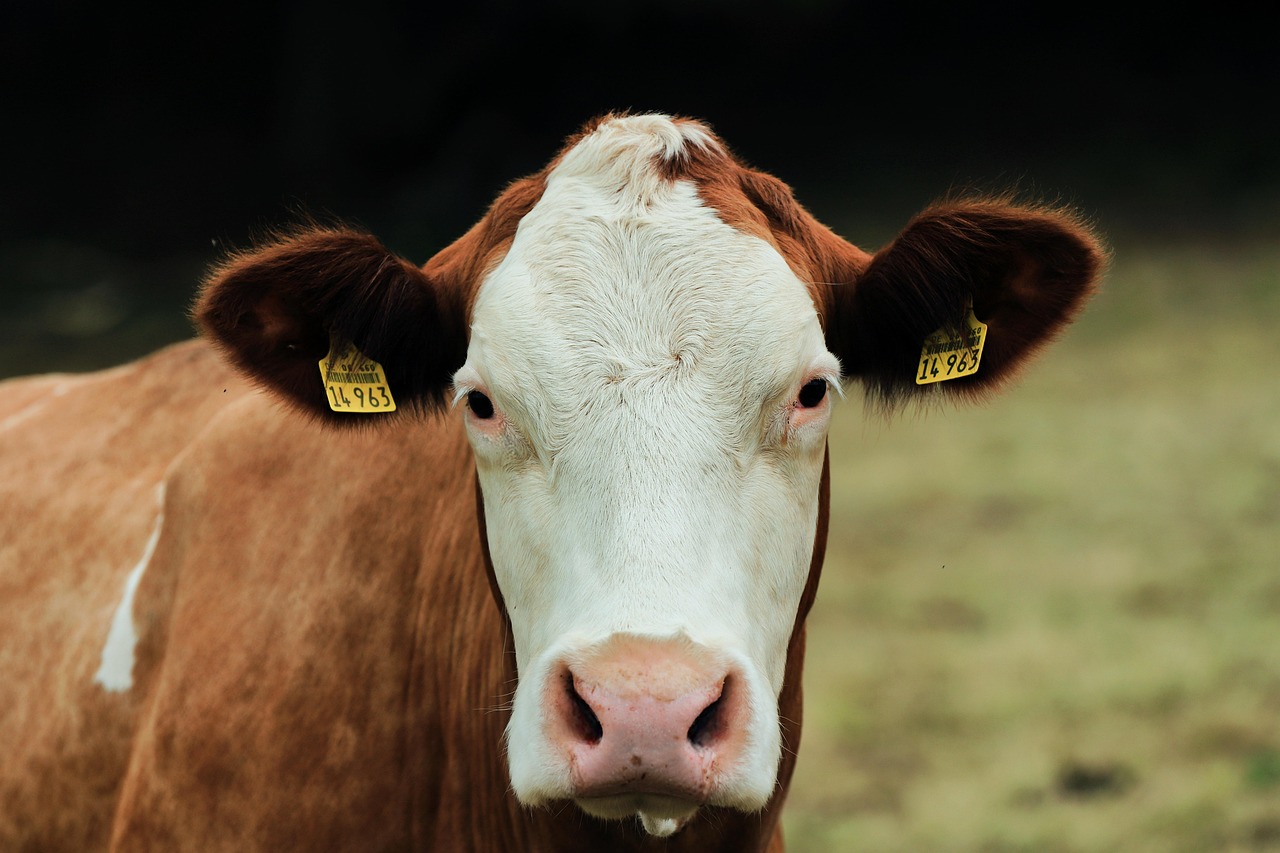
Dairy Cows Are Having an Identity Crisis!
A single dairy cow can carry fifteen to twenty different ID numbers across government, breed, genomics, and software systems. We mapped every single one. The result is equal parts impressive and absurd.
# Dairy Cows Are Having an Identity Crisis!
A few weeks ago, we published [One Cow, Five Identities: The Missing Primitive](/news/one-cow-five-identities-the-missing-primitive), laying out the case that fragmented animal identity is the foundational problem holding back dairy technology. It was the category thesis. This is the field report.
We went and counted. Every government tag, every breed association number, every genomics accession, every herd management key, every co-op reference, every insurance policy number. All of it. For one cow.
The final tally? Fifteen to twenty separate identification numbers, depending on how many services the farm uses. Each one issued by a different organization, stored in a different database, formatted in a way that makes the others basically invisible.
If your office manager has ever spent an hour cross-referencing spreadsheets just to figure out which cow a lab result belongs to, this article will explain exactly why.
## The Short Version
- A single US dairy cow routinely carries 15–20 different unique identifiers across government, breed association, genomic, herd management, milk recording, cooperative, financial, veterinary, and hardware systems.
- Each system was built independently and assigns its own ID with its own format, creating an identity fragmentation problem that grows with every new service a producer adopts.
- Reconciling these IDs is manual, error-prone, and invisible labor that drains time from more productive work.
- The problem gets worse at every handoff: when cows move between farms, when records transfer between software platforms, and when compliance audits require tracing an animal across systems.
- A unified digital identity layer, one permanent ID that links all others, is the structural fix the industry needs.
## Every System That Gives Your Cow a Number
### Government and Regulatory IDs
The federal and state governments are the first layer of identity. Every dairy cow that crosses a state line, enters a sale barn, or participates in a disease testing program picks up government-issued identifiers.
**USDA APHIS Premises Identification Number (PIN/LID).** The Premises Identification Number is assigned to the physical location where animals are kept, not to the animal itself. But it becomes part of the animal's identity record because every traceability event, movement, testing, slaughter, references the premises. A farm with multiple locations may hold multiple PINs, and the animal's record must reference the correct one for each event.
**National Uniform Eartagging System (NUES) 840-prefix RFID tag number.** Under the USDA's Animal Disease Traceability (ADT) rule, cattle moving interstate must carry an official 840-prefix RFID tag. This 15-digit number (840 country code + 12-digit unique identifier) is the closest thing the US has to a national animal ID. But it is tied to a physical tag, not to the animal, and if a tag is lost or replaced, the new number creates a reconciliation challenge.
**State brand and registration numbers.** Many states maintain their own livestock identification programs. State brand inspection numbers, state ear tag numbers, and state registry entries each come with their own identifier format. A cow born in Wisconsin that moves to Idaho may carry both a Wisconsin registration number and an Idaho brand inspection number.
**Veterinary Health Certificate IDs.** Every interstate movement requires a Certificate of Veterinary Inspection (CVI), and each CVI carries its own document number that references the animal. These are increasingly electronic (eCVIs), but the certificate ID is separate from the RFID tag number and the premises ID.
**TB and Brucellosis test IDs.** Animals tested for tuberculosis or brucellosis receive test identification numbers tied to the testing laboratory, the veterinarian, and the regulatory program. These are yet another set of identifiers that must be linked back to the animal.
### Breed Association IDs
Every breed registry maintains its own numbering system, and a cow can be registered with more than one if her parentage qualifies.
**Holstein USA registration number.** [Holstein Association USA](/dairy-directory/holstein-association-usa-complete-registration-type-genomics-bundle) assigns a unique registration number to every enrolled animal. This number follows a specific format that encodes registration type and sequence. It is not the same as the RFID tag number, the herd management number, or any government ID.
**[Jersey registration number](/dairy-directory/jersey-cattle-registry-complete-guide-to-american-jersey-cattle-association-serv).** The American Jersey Cattle Association uses its own numbering scheme, completely independent of Holstein USA.
**Brown Swiss, Ayrshire, Guernsey, and other breed registries.** Each breed association, Brown Swiss Association, Ayrshire Breeders' Association, American Guernsey Association, and others, assigns its own registration numbers with its own format and its own database.
**Crossbred and multi-breed registrations.** As crossbreeding becomes more common in US dairies, animals may carry registration numbers from multiple breed associations, or from programs like the Purebred Dairy Cattle Association that attempt to bridge registries.
### Genomic and Genetic IDs
The genomic revolution added an entirely new layer of identifiers that sit alongside, but do not replace, the traditional ones.
**NAAB stud codes.** The National Association of Animal Breeders assigns standardized codes to AI studs and sires. These codes are used universally in semen catalogs and breeding records but do not correspond to any other ID system.
**[CDCB](/dairy-directory/cdcb-genetic-evaluations-council-on-dairy-cattle-breeding-guide) animal IDs.** The Council on Dairy Cattle Breeding maintains its own animal identification database for genetic evaluations. Every animal in the CDCB system has a unique identifier used for publishing Predicted Transmitting Abilities (PTAs) and genomic evaluations. This ID is separate from the breed registration number, even though the two are supposed to be linked.
**[Zoetis CLARIFIDE](/dairy-directory/zoetis-clarifide-plus-genomic-testing) sample IDs.** When a producer orders a CLARIFIDE genomic test from Zoetis, the tissue sample receives a unique sample identification number. This sample ID must be manually linked back to the animal's other identifiers to associate genomic results with the correct cow.
**Neogen/Igenity IDs.** Neogen's Igenity genomic platform assigns its own sample and animal identifiers, separate from CLARIFIDE, CDCB, and breed association numbers.
**Council on Dairy Cattle Breeding evaluation numbers.** CDCB publishes genetic evaluations under animal IDs that must be cross-referenced with breed association registrations and on-farm herd management numbers to be actionable.
### Herd Management Software IDs
This is where the identity fragmentation hits producers directly in their daily workflow.
**[DairyComp 305](/dairy-directory/dairy-comp-305-valley-agricultural-software-guide) internal cow number.** Valley Ag Software's DairyComp 305 assigns each animal an internal database ID and also uses the producer's chosen cow number (often a short numeric ID used in the parlor). These are not the same as the RFID tag number or any external identifier.
**[BoviSync](/dairy-directory/bovisync-cloud-dairy-management-modern-mobile-first-herd-software) ID.** BoviSync generates its own unique animal identifiers within its cloud-based herd management platform.
**[PCDart](/dairy-directory/pcdart-complete-guide-to-drms-dairy-herd-management-software) ID.** Dairy Records Management Systems' PCDart software assigns its own internal ID to every animal in the herd.
**DHI Plus ID.** DHI Plus, another popular herd management platform, maintains its own animal identification scheme.
**[AfiFarm](/dairy-directory/afimilk-afifarm-herd-management) ID.** Afimilk's AfiFarm system assigns internal IDs tied to its milking and monitoring hardware.
**[DeLaval VMS](/dairy-directory/delaval-vms-v310-complete-guide-to-robotic-milking-for-dairy-farms) ID.** DeLaval's DelPro herd management system creates its own animal records with its own unique identifiers.
**[Lely Astronaut](/dairy-directory/lely-astronaut-a5-robotic-milking-system) ID.** Lely's Time for Cows (T4C) management software for robotic milking systems assigns its own animal IDs that are linked to the robot's transponder system.
Every time a producer switches herd management software or runs multiple systems in parallel (which is common on large dairies with different equipment vendors), the animal acquires another ID that must be reconciled.
### DHIA and Milk Recording IDs
Dairy Herd Improvement Association testing and milk recording create another parallel identification layer.
**DHIA herd number + cow number.** Every DHIA-enrolled herd has a unique herd number, and every cow within that herd has a cow number within the DHIA system. The combination forms a DHIA animal ID that is separate from breed registration and herd management software IDs.
**[DRMS](/dairy-directory/drms-dairy-records-management-systems) ID.** Dairy Records Management Systems (DRMS), which processes a large share of US DHI records, assigns its own internal processing IDs to animals.
**[AgriTech Analytics](/dairy-directory/agritech-analytics-complete-guide-to-dairy-records-processing) ID.** AgriTech Analytics, another DHIA records processing center, maintains its own animal identification database.
**[AgSource](/dairy-directory/agsource-cooperative-dhi-services) ID.** AgSource Cooperative Services processes DHI records for many Upper Midwest herds and assigns its own animal identifiers.
### Milk Cooperative and Processor IDs
The milk marketing and processing chain introduces yet another set of numbers.
**Co-op member number.** Every dairy cooperative assigns a member number to each farm. While this is a farm-level ID, it becomes part of the animal's identity context for milk quality tracing, premium programs, and compliance documentation.
**Milk license and permit numbers.** State dairy licensing programs assign permit numbers that are tied to the farm's right to sell milk. These numbers appear on regulatory documents alongside animal-level records.
**Bulk tank ID.** Milk cooperatives and processors assign bulk tank identifiers for quality tracking. On multi-location farms, different tanks may have different IDs, adding another layer of location-specific identification.
### Financial and Insurance IDs
The financial infrastructure around dairy cattle generates its own identification layer.
**USDA Livestock Risk Protection (LRP) and Livestock Gross Margin (LGM) policy numbers.** USDA risk management programs assign policy numbers that reference covered animals. While these are policy-level IDs, they must be reconciled with animal-level records for claims and compliance.
**FSA farm and tract numbers.** The Farm Service Agency assigns farm numbers and tract numbers used for USDA program enrollment, disaster payments, and financial reporting. These tie back to animals indirectly through inventory and production records.
### Health and Veterinary IDs
Veterinary care adds its own layer of identification.
**Veterinary clinic patient IDs.** Every veterinary practice assigns its own patient ID to each animal it treats. Large dairies working with multiple vet clinics may have the same cow carrying different patient IDs in different veterinary record systems.
**Pharmaceutical tracking IDs.** Drug tracking programs, withdrawal monitoring systems, and antibiotic stewardship platforms assign their own identifiers to track treatments at the animal level.
### RFID Hardware IDs
Even the physical tags themselves create identification complexity.
**Visual tag number.** The number printed on the visual portion of an ear tag, what a person reads in the pen or the parlor.
**Electronic tag number.** The number stored in the [RFID transponder](/dairy-directory/allflex-rfid-cattle-tags-readers-complete-identification-guide), what a reader scans electronically. These two numbers are often different, particularly when farms use combination visual/electronic tags where the printed number is a short farm ID and the electronic number is the full 840-prefix.
**Management tag number.** Many farms apply a secondary management tag (often a smaller, colored tag) with a short number used for daily identification. This number exists in no external system and is often the number used in herd management software, creating another translation layer.
## One Cow, Many IDs: A Concrete Example
Meet cow 2314. That is her management tag number, the yellow ear tag the feeders and milkers know her by. The dairy farmer's two young children, her biggest fans, call her Lady Creamsworth. Here is every other identifier she carries across the systems her farm interacts with:
| # | System | Identifier | Format Example |
|---|--------|-----------|----------------|
| 1 | Farm management tag | 2314 | Short numeric |
| 2 | 840 RFID tag (electronic) | 840003212345678 | 15-digit national ID |
| 3 | 840 RFID tag (visual) | 345678 | Last 6 digits printed on tag |
| 4 | Holstein USA registration | HOUSA000074185293 | Breed prefix + sequence |
| 5 | USDA Premises ID (PIN) | WI341T4 | 7-char alphanumeric code |
| 6 | DairyComp 305 internal ID | 48817 | Software auto-increment |
| 7 | DHIA cow number | 42-2314 | Herd-cow composite |
| 8 | DRMS processing ID | 281947362 | Processor control number |
| 9 | CDCB animal ID | HO840003074185293 | 17-byte breed-country-ID |
| 10 | Zoetis CLARIFIDE sample ID | Z20240847291 | Lab accession number |
| 11 | NAAB sire code (dam side ref) | 7HO16238 | Stud code + bull ID |
| 12 | State brand registration | BR-41873 | State brand certificate no. |
| 13 | Vet clinic patient ID | GVS-PAT-008421 | Clinic system ID |
| 14 | Co-op member + tank ID | MC-4872 / Tank-02 | Cooperative reference |
| 15 | eCVI document ID | eCVI-WI-2024-28471 | Interstate health cert |
| 16 | LRP endorsement no. | 81-2024-004182 | Plan code + endorsement |
| 17 | AgriTech Analytics control no. | 4872-2314-0326 | Herd-cow-test sequence |
| 18 | FSA farm/tract number | 847-003 | Farm serial + tract number |
That is eighteen different identifiers for one animal. Every one of them lives in a different database, managed by a different organization, formatted in a different way. None of them automatically sync with the others.
## Why This Matters: The Real Cost of Fragmented Identity
### Invisible Labor
Every time a producer needs to connect information across two systems, linking a genomic result to a herd management record, matching a vet treatment to a DHIA test day, reconciling a breed registration with an RFID tag replacement, someone has to manually look up, cross-reference, and verify identifiers. On a 2,000-cow dairy, this reconciliation work adds up to hundreds of hours per year spread across office staff, herd managers, veterinarians, and consultants.
### Error Propagation
Manual cross-referencing means manual errors. A transposed digit, a mismatched record, or a lost tag replacement creates data quality problems that cascade through every downstream system. Genomic results get attached to the wrong cow. Treatment records do not match milk withdrawal timelines. Registration transfers fail because the RFID number on file does not match the tag in the ear.
### Compliance Risk
The USDA's ADT rule requires traceable identification for interstate movement. When a cow's identity record is fragmented across fifteen systems with no single authoritative link, producing clean compliance documentation becomes a research project instead of a routine task. As traceability requirements tighten, and they will, this fragmentation becomes a regulatory liability.
### Lost Data Value
Every identifier represents a system that holds valuable information about the animal: her genetics, her health history, her production performance, her movements, her financial value. When those identifiers cannot be reliably linked, the data stays siloed. Producers cannot build a complete picture of an animal's lifetime value, and the industry cannot aggregate insights that would benefit everyone.
### Transfer and Movement Friction
When cows are sold, moved between farms, or transferred between management systems, the identity reconciliation problem multiplies. The buyer inherits a partial identity record and must rebuild connections to breed associations, genomic databases, DHIA records, and regulatory systems. This friction slows transactions, increases errors, and reduces the value of the data that should travel with the animal.
## How Did We End Up Here?
Nobody sat down and designed this mess. Every ID exists for a good reason, created by an organization solving a real problem:
- USDA needed to trace disease outbreaks, so they created the AIN system.
- Breed associations needed to verify pedigrees, so they created registration numbers.
- Genomic labs needed to track samples, so they created accession codes.
- Software companies needed internal database keys, so they auto-generated their own.
- Co-ops needed to trace milk quality back to individual farms and animals.
- Vets needed patient records. Insurers needed policy references.
Each system was built at a different time, by a different organization, on a different tech stack. Nobody was in charge of making sure they all talked to each other. So they don't.
The cow herself is the only thing connecting all her identifiers, and she is not exactly in a position to sort out the paperwork. The dairy farmer does his best to help manually enter and connect the IDs, but that's a big job he never signed up for. And it takes away from his Saturday family time with his children, who still suggest he just refer to the cow as "Lady Creamsworth" in each of the systems. Problem solved.
## Is There a Way Out of This Mess?
Yes, but it means rethinking how identity works in the first place.
Right now, every organization treats animal identity as a side effect of its own workflow. USDA needs a number for compliance. The breed association needs one for registration. Your herd management software needs one because it has a database. None of them started by asking, "What number does this cow already have?"
The answer is not another numbering system. The industry has plenty of those. The answer is a coordination layer that maps all of the existing IDs together and gives each animal one persistent reference point. Think of it like a passport: the cow keeps her breed registration and her RFID tag number, but she gains one permanent identity that every system can point to.
The technical building blocks already exist (ICAR standards, ISO 11784/11785, the USDA AIN framework). The hard part has always been getting organizations to actually connect them. That is starting to change.
## What Can You Actually Do About This Right Now?
You do not have to wait for the industry to fix itself. Here are a few things any operation can do today:
**Pick an anchor ID.** Choose one system as your internal source of truth and document how every other number maps back to it. Your USDA 840 tag or your herd management software ID are usually the best candidates. Even a spreadsheet beats having nothing.
**Grill your vendors.** Before signing up for a new service, ask how animal records get in and out. If the answer involves someone manually typing numbers into a second system, that should give you pause. Look for platforms that work with standard identifiers and offer data export.
**Say something.** When your breed association, genomics provider, or milk recording service asks for feedback, tell them that cross-system ID matching is a real pain point. The standards already exist. The challenge is getting everyone to use them.
**Keep an eye on Therio.** The industry is starting to recognize that animal identity is infrastructure, not just a feature buried inside individual software products. Therio's mission is to build the interoperable identity rails that every system can reference. When we are successful, the spreadsheet reconciliation era is over.
Dairy has invested heavily in digitizing genetics, production, health, and financials. The infrastructure that connects all of it, a clean and portable animal identity, is the next frontier. Getting ahead of it now means less time wrestling with data and more time using it for good. This is what Therio hopes to help you achieve.
---
*This article is a companion piece to [One Cow, Five Identities: The Missing Primitive](/news/one-cow-five-identities-the-missing-primitive). Have questions about animal identity systems or want to share how your operation handles ID reconciliation? Reach out at [info@therio.ai](mailto:info@therio.ai).*