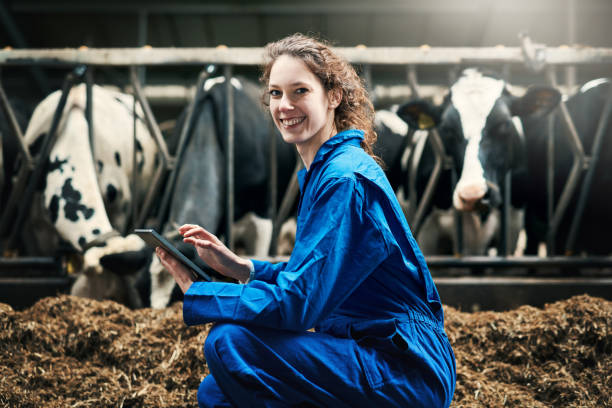
Dairy's Generational Reset: How Digitally Native Farmers are Reshaping the Industry
The next generation of dairy farmers expects technology to be infrastructure, not a novelty. This shift is redefining what competence looks like in the industry.
The next generation of dairy farmers is not arriving quietly. In many cases, they are not even arriving through the front door of tradition. Some grew up on farms and came back with laptops, dashboards, and higher expectations shaped by the digital world. Others never ran a farm at all, but saw dairy as an industry full of complexity that could be turned into opportunity. What unites them is not age, but instinct. They expect systems to work, data to move seamlessly, and inefficiencies to be mitigated.
For these younger entrants, technology is not a novelty. It is infrastructure. They do not see digital tools as optional upgrades or risky experiments. They assume software should integrate, alerts should surface problems early, and automation should protect time and attention. When those things don't happen, their reaction turns to confusion rather than fear.
This mindset marks a quiet but profound shift in how dairy is and will be run.
Previous generations learned farming through observation and experience earned the hard way. Information was scarce and many times incorrect, and effort filled the gaps. Today's new farmers arrive fluent in the digital age. They are familiar with dashboards that summarize complex operations, expect tools to reduce manual work, and deploy feedback loops that improve performance over time. They bring those expectations with them into the parlor, the calf barn, and the office.
That is changing the conversation around technology adoption. Older debates often centered on whether a system was worth the trouble or whether it could be trusted. Younger operators tend to ask different questions. Does it integrate with what we already use? Does it save real time? Does it reduce mental load? If the answer is no, the tool feels broken regardless of how advanced it claims to be.
This shift is also opening the door to people who never imagined themselves in dairy a generation ago. Engineers, data analysts, animal science graduates, and operations managers are finding their way into the industry. They are drawn not just by agriculture, but by the challenge of running complex biological systems at scale. Dairy offers constant feedback and endless room for optimization.
These newcomers often thrive in environments where processes are clear and systems are reliable. They expect training to be structured and performance to be measurable. Dairy has not always been built that way. Much of its knowledge lives in people's heads and calloused hands rather than in documentation, creating friction for those who are used to learning through highly detailed systems rather than apprenticeships.
Technology helps bridge that gap as digital workflows turn tribal knowledge into shared understanding. Alerts replace constant vigilance. And software becomes a way to scale experience without demanding decades, if not generations, of it.
As more digitally native farmers enter the industry, competition begins to take on a new shape. There is a quiet arms race underway, though it rarely looks like one from the outside. The competition is not about who owns the most sensors or the newest robots. It is about who runs the smoothest operation, which often correlates with who has the cleanest data.
Among younger producers, efficiency has become a form of identity. They notice how quickly issues are flagged and resolved. They compare how much time is spent reacting versus planning. They pay attention to whether systems talk to each other or force constant manual intervention. These comparisons happen informally through local conversations and online communities. And over time, they set new expectations for what a well run dairy looks like.
Technology becomes a signal. A farm with clean data flows and reliable alerts feels professional and intentional. A farm held together by disjointed spreadsheets and memory feels risky. This dynamic accelerates adoption without any formal pressure. No one needs to sell the idea of digital efficiency to the newest generation of dairy operators.
At the same time, this new mindset runs headfirst into legacy systems and habits. Many dairies operate with a patchwork of tools built at different times for different purposes. Data often lives in silos, making integrations partial or nonexistent. Younger operators step into leadership roles and immediately see friction where others saw normalcy. This tension is not about disrespecting experience. It is about mismatch. The systems that worked when labor was abundant (and more affordable) and data was scarce struggle when labor is tight and data is everywhere. Younger farmers are less willing to compensate with extra hours or mental load. So rather than brute force effort, they look for leverage instead, working smarter, not necessarily harder.
That search for leverage is reshaping how farms evaluate technology. Return on investment is no longer measured only in milk or labor savings. Tools that reduce chaos earn loyalty. Tools that add complexity get abandoned quickly.
This is also changing how AgTech companies design and sell. Younger farmers expect consumer-grade experiences in professional tools. They expect updates, transparency, and responsiveness. Many are comfortable acting as beta testers and providing direct feedback to help shape the product. The relationship between vendor and farmer is becoming more collaborative, driven by iteration rather than one-time purchases.
Dairy's generational shift is happening at a moment when the industry needs it most. Labor shortages, economic pressure, and rising expectations around animal welfare all demand smarter systems. Digital native farmers are not trying to turn dairies into tech startups. They are trying to make them manageable.
What makes this moment different from previous waves of innovation is that it is not being pushed from the outside. It is being pulled from within by people who see inefficiency as a problem to solve rather than a condition to endure. Some of them carry family legacies. Others arrive with fresh eyes. Together, they are redefining what competence looks like in the industry.
Dairy is quickly becoming an industry people choose, not just inherit. That choice comes with expectations around quality of life and clarity of expectations. Technology is central to that vision, not because it is flashy, but because it works.
The next generation is not asking whether dairy should be digital. They are asking why it never was. Farms and systems that align with that mindset will attract talent and momentum. Those that resist it may find themselves short on both.
The future of dairy will still be built on cows, land, and people. And yes, hard work will still be its cornerstone. But it will also be built on software and data that reflect how a new generation thinks. That shift is already underway, and it is moving faster than many realize.
---
*Here at Therio, we'd love to talk with you about the future of dairy technology. [Schedule a time to speak with us](https://calendly.com/therio) or reach out at [info@therio.ai](mailto:info@therio.ai).*