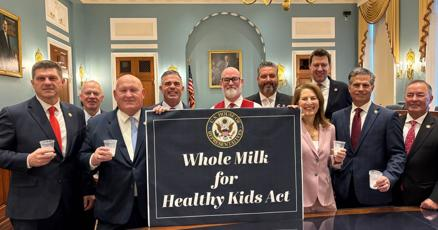
Whole Milk for Healthy Kids Act Passes Congress, Heads to President's Desk
Bipartisan legislation restoring whole and reduced-fat milk to school cafeterias passes the House and Senate, ending a 13-year ban. The bill now awaits President Trump's signature.
# Whole Milk for Healthy Kids Act Passes Congress, Heads to President's Desk
After more than a decade of federal restrictions, whole milk is poised to return to school cafeterias across America. The bipartisan Whole Milk for Healthy Kids Act passed the House of Representatives on December 15, 2025, following Senate approval earlier this month. The legislation now heads to President Trump's desk for signature.
The bill reverses a 2012 federal policy that prohibited schools participating in the USDA's National School Lunch Program from serving whole and reduced-fat (2%) milk. Under the new law, schools will have the flexibility to offer flavored and unflavored whole milk alongside existing low-fat and skim options.
---
## A Win for Kids and Dairy Farmers
Supporters of the legislation hailed it as a victory for both child nutrition and the American dairy industry.
"The Whole Milk for Healthy Kids Act takes on America's growing food and nutrition-insecurity issues with school-aged children by expanding students' access to the most popular, nutrient-rich types of milk in their school lunches," said Congressman Pat Ryan (D-NY), a lead sponsor of the bill.
The legislation garnered broad bipartisan support, with 38 Democrats and 80 Republicans co-sponsoring the bill in the House, and 5 Democrats, 10 Republicans, and 1 Independent backing it in the Senate.
Representative Glenn Thompson (R-PA), Chair of the House Agriculture Committee, emphasized the nutritional benefits: "Milk provides 13 essential nutrients that supplement growth and health, two key factors contributing to academic success."
---
## Addressing Under-Consumption of Dairy
Since whole milk was removed from school cafeterias in 2012, milk consumption among school-aged children has declined significantly. According to USDA data, schools served 213 million fewer half-pints of milk between 2014 and 2016 alone.
The 2020-2025 Dietary Guidelines for Americans report that up to 75% of school-aged children fail to meet their recommended daily dairy intake. Updated research now indicates that higher-fat milk consumption is associated with lower childhood obesity and other positive health outcomes—contradicting the original rationale for the ban.
"The Dietary Guidelines Advisory Committee reaffirmed that most Americans under-consume nutrient-dense dairy," said Gregg Doud, President and CEO of the National Milk Producers Federation. "This bill lets schools offer students the healthful milk options they are most likely to drink."
---
## Economic Impact on Dairy Industry
School milk represents approximately 8% of total fluid milk demand nationwide. With nearly 4.9 billion school lunches served in 2024 and 85% of students choosing milk, the legislation could meaningfully boost dairy consumption.
Industry analysts estimate that if 25-75% of schools adopt whole milk, annual butterfat demand could increase by 13-55 million pounds—providing a significant lift to dairy farmers who have faced persistent market challenges.
"This bill is a win-win—it supports New York's hardworking dairy farmers and helps promote healthy, balanced meals for American kids," Congressman Ryan said.
---
## Key Provisions of the Bill
The Whole Milk for Healthy Kids Act includes several important provisions:
- **Expanded Milk Options**: Schools can offer whole, 2%, 1%, and skim milk in both flavored and unflavored varieties, including lactose-free and organic options
- **Saturated Fat Exemption**: Milk fat will be exempted from the <10% saturated fat limit that applies to school meals
- **Nondairy Alternatives**: Parents and guardians can submit written requests for students to receive USDA-approved nondairy milk substitutes without requiring a physician's note
- **Local Flexibility**: Schools are not required to switch—adoption is optional based on local preferences
- **Sourcing Restrictions**: Schools are prohibited from purchasing milk from Chinese state-owned enterprises
---
## What Happens Next
The bill awaits President Trump's signature, which is expected in the coming days. Once signed into law, schools can begin offering whole and 2% milk options immediately.
"Let's give them the option to enjoy it again in schools—it's good for them, they'll actually drink it, and it supports our farmers," said Senator John Fetterman (D-PA). "This bill is a simple solution that benefits everyone."
---
## Industry Reaction
Dairy industry groups celebrated the legislation's passage:
"IDFA thanks co-sponsors for their bipartisan introduction of the Whole Milk for Healthy Kids Act, which would allow schools to provide the nutritious milk options that children prefer," said Michael Dykes, D.V.M., President and CEO of the International Dairy Foods Association. "A wide majority of parents and medical and nutrition professionals know that offering whole milk increases school meal participation, reduces food waste, and provides nutritionally valuable school meals."
---
*Sources: [Office of Congressman Pat Ryan](https://patryan.house.gov/media/press-releases/congressman-pat-ryans-bipartisan-whole-milk-healthy-kids-act-passes-house), [International Dairy Foods Association](https://www.idfa.org/news/idfa-celebrates-final-passage-of-whole-milk-for-healthy-kids-act-clearing-the-way-for-whole-and-2-milk-to-return-to-schools), [House Agriculture Committee](https://thompson.house.gov/media-center/press-releases/house-overwhelmingly-passes-thompsons-whole-milk-healthy-kids-act)*